Hazmat equipment
Special solutions for emergencies
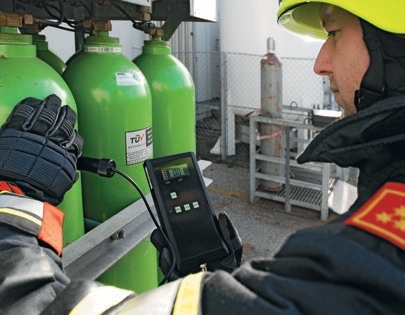
Rosenbauer offers the right solutions for dealing with hazardous materials (HAZMAT = hazardous materials). Materials are labeled as hazardous if their release could pose danger to life and the environment. These materials are produced and transported in the physical states of solid, liquid, or gaseous. They can damage the human organism depending on the concentration and exposure time.
Classification of dangerous substances
Dangerous substances are classified in:
(A) Nuclear
(B) Biological and
(C) Chemical materials
Three stages are differentiated depending on the potential danger and the extent of damage.
Emergency measures for accidents with hazardous materials
- Recognize danger – investigate
▪ Perception: e.g. smoke, for, flames, hissing of an escaping gas etc.
▪ Designation on trucks, tankers, freight containers or on drums, canisters or gas cylinders: e.g. danger note, warning sign, shipping documents, safety data sheets
▪ Measuring: e.g. with gas sensors - Cordon off and secure
The accident area should be cordoned off over a wide area, not only to prevent approaching persons and vehicles from creating even greater damage, but also to permit rescue personnel to work without obstructions. - Rescue persons!
People must be rescued quickly during every operation. The head of operations is responsible for determining conditions. - Stabilize the situation: Collect – Seal – Pump
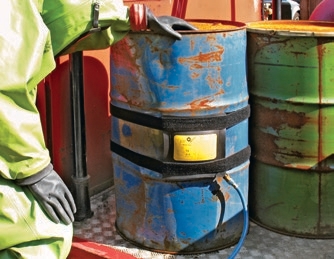
▪ Collect: e.g. by placing collecting trays, providing a catch basin
▪ Seal: e.g. by inflating pneumatic leak-sealing bags or hammering a sealing wedge into a tear or puncture
▪ Pump: e.g. by pumping out of the defective tank or container and pumping into another container
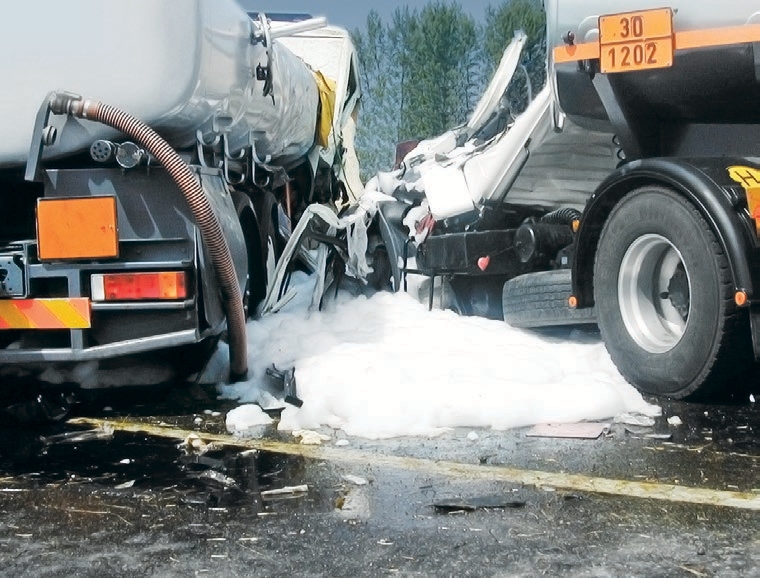
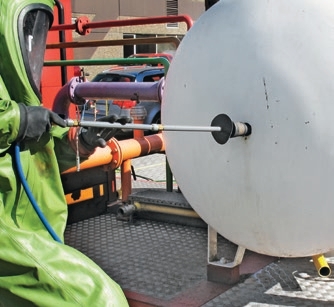
Hazardous substances. Three stages of danger.
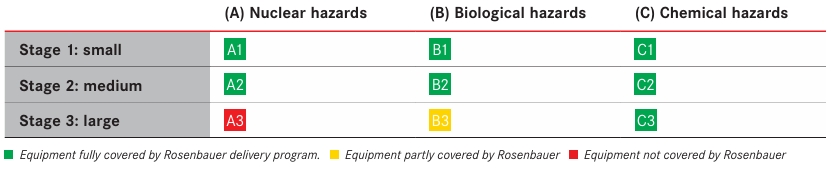
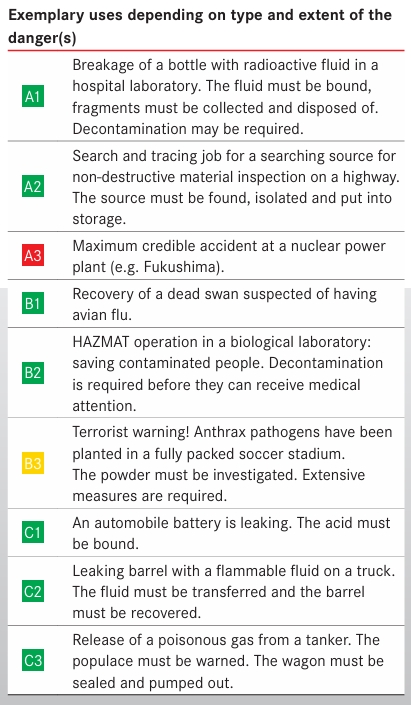
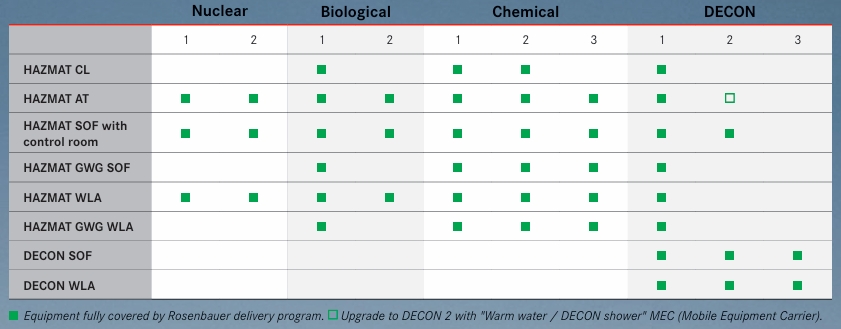
The Rosenbauer line concentrates on the areas that are shown in green – these cover most of the operational areas of fire departments.
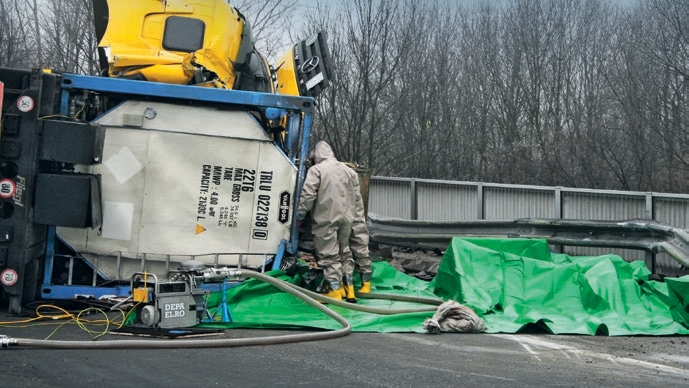
▪ Transport accidents (e.g. roads, rails, shipping, air transport)
▪ Accidents in industrial plants (e.g. refineries, chemical industry)
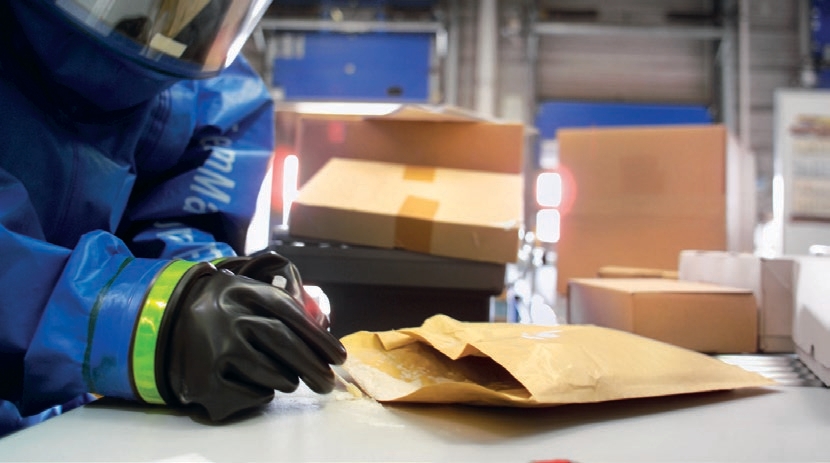
▪ Terrorist attacks (e.g. the discovery of a suspicious powder)
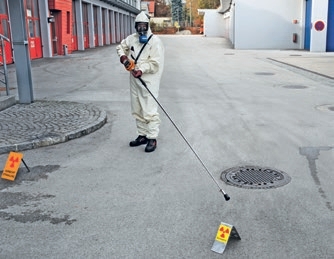
▪ Incidents in nuclear power plants
Decontamination
BASIC. STANDARD. MASS.
Contamination is the exposure of persons, objects, rooms, or the environment to radioactive (nuclear) (A) and/or biological (B) and/or chemical materials (C).
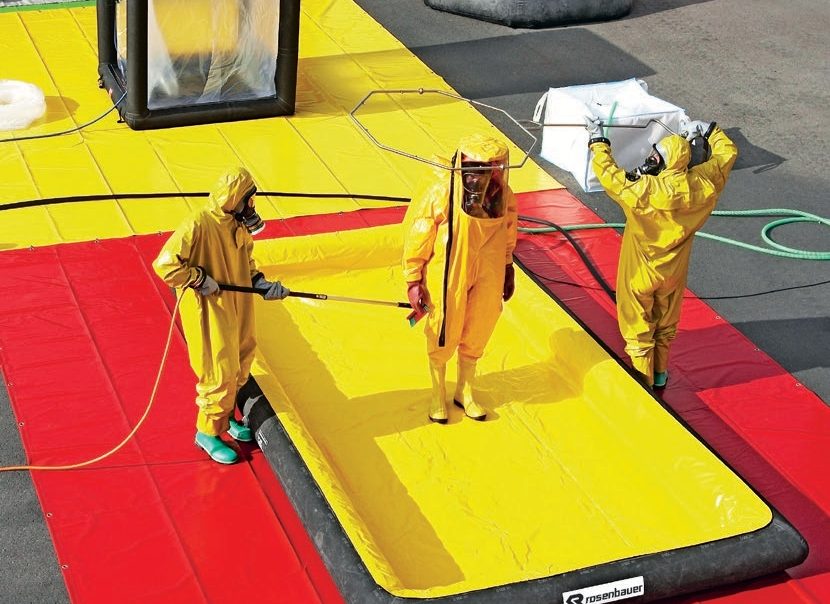
Decontamination is the reduction or removal of a hazardous material from a surface (mainly from protective clothing and own equipment). It is therefore to be carried out carefully after every operation!
decontamination
Three stages are distinguished depending on scope and intensity of the decontamination :
DECON stage 1
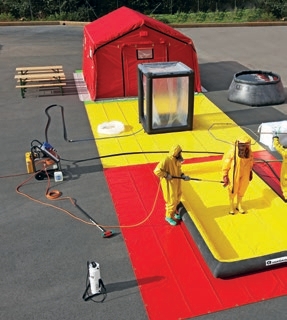
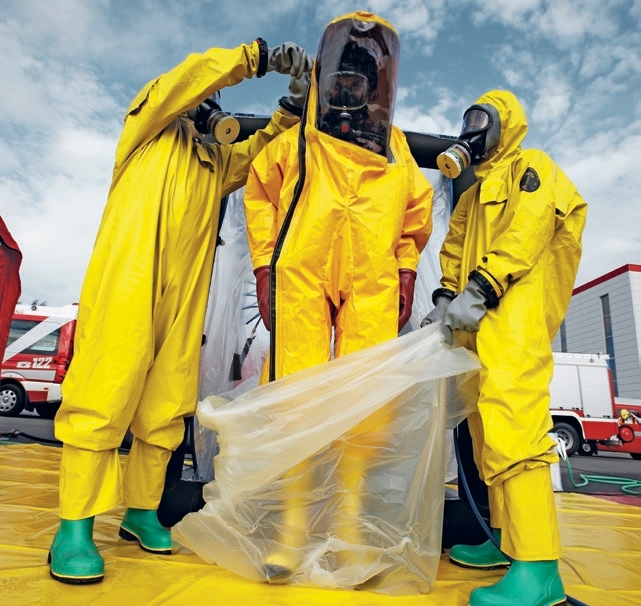
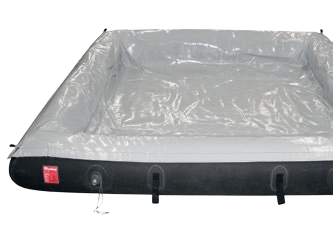
BASIC decontamination DECON stage 1 is carried out for small-scale operations. This takes place on a single decontamination area (tub) and is used to decontaminate operational personnel and/or their equipment. In addition to the decontaminant (e.g. polyethylene glycol), only cold water is used.
DECON stage 2
STANDARD decontamination With around 6 persons or more, i.e. for medium or large-scale operations, a structured DECON procedure with the following stations is required: Preliminary cleansing and primary cleansing (cold and warm water),
followed by regeneration (dressing and supply)
DECON stage 3
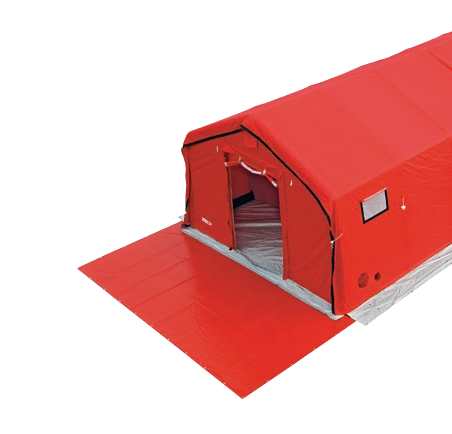
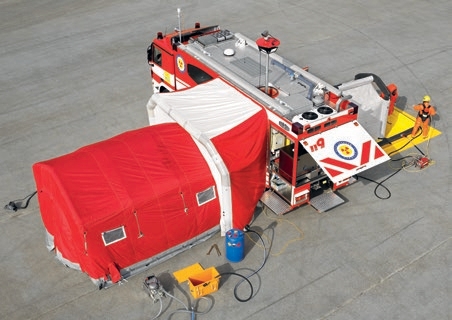
MASS decontamination, DECON stage 3 requires an extensive cleansing technique that is preinstalled in a vehicle together with an electric power supply. The operational personnel undergo preliminary cleansing in a decon shower set up outside. Then the protective suits are taken off and put into storage. “Fine-scale decontamination” takes place inside the vehicle. Afterwards, the decontaminated person receives replacement clothing or regeneration may take place (e.g. drinking isotonic beverage). Alternatively, a Mass DECON set is also available as DECON stage 3 for the decontamination of a large number of civilians at large-scale events, for example. Among other things, this includes three inflatable tents (removal of contaminated clothing, cleansing, dressing, and supplies).
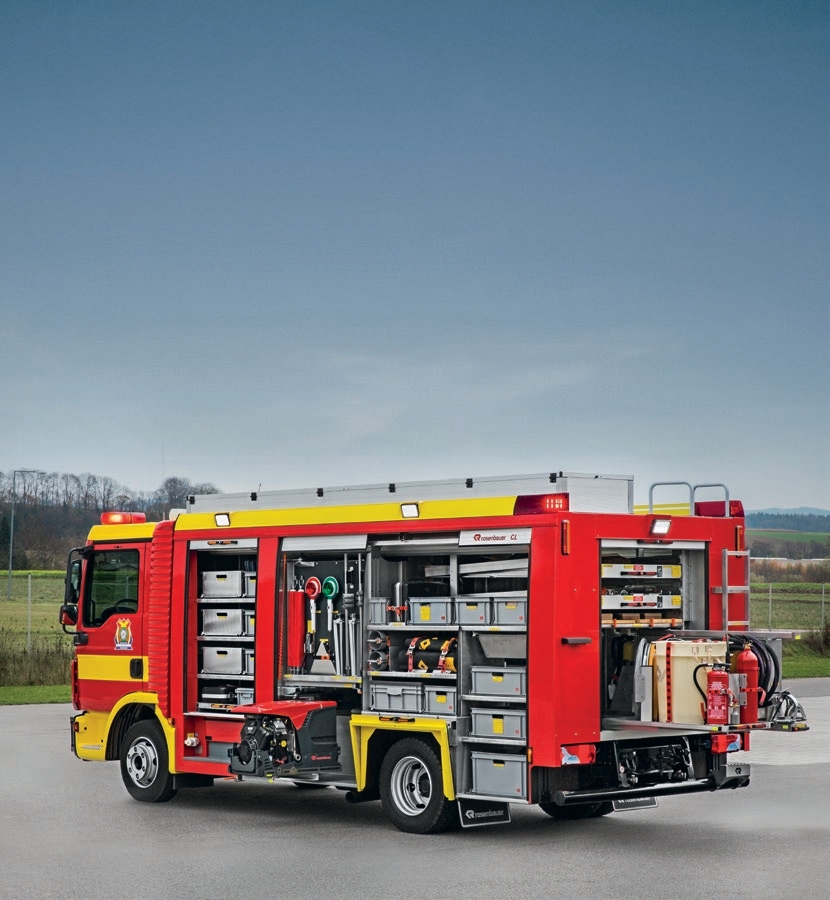
HAZMAT and DECON concepts
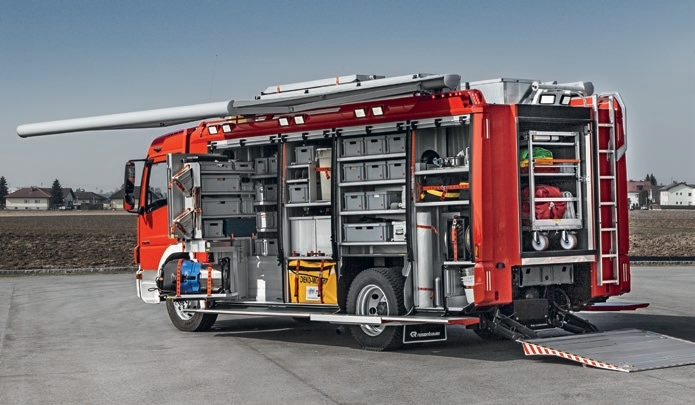
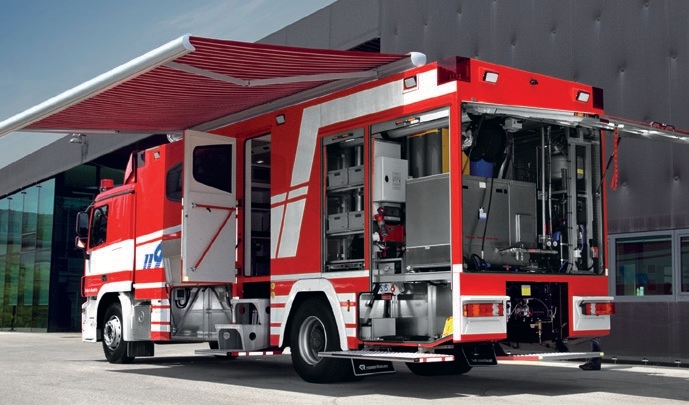
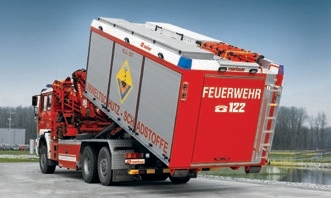
A2 B2 C3 D1
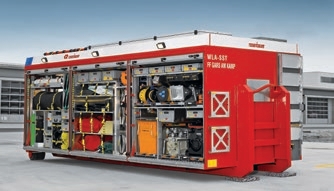
B1 C3 D1
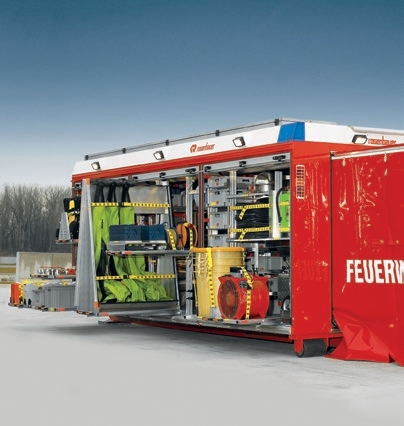
A2 B2 C3 D1
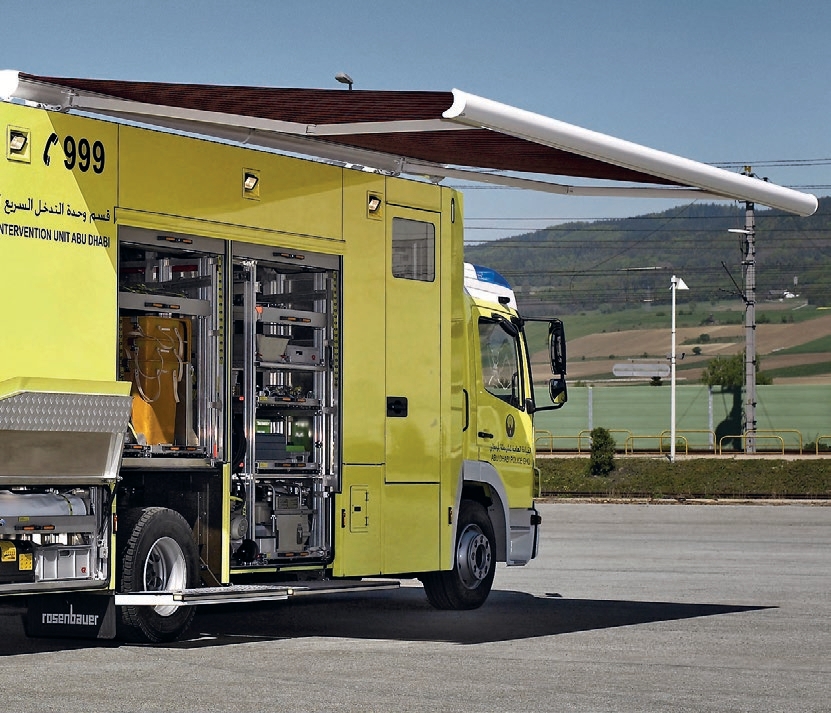
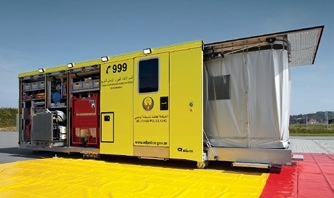
D3
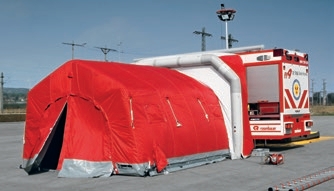
D3
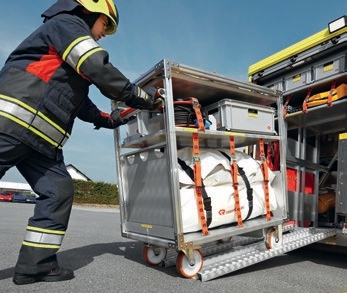
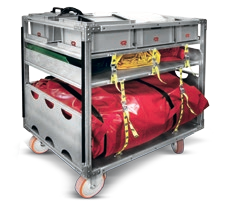
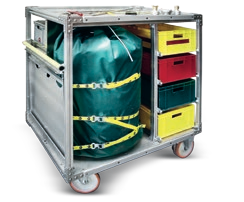
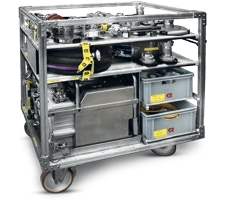
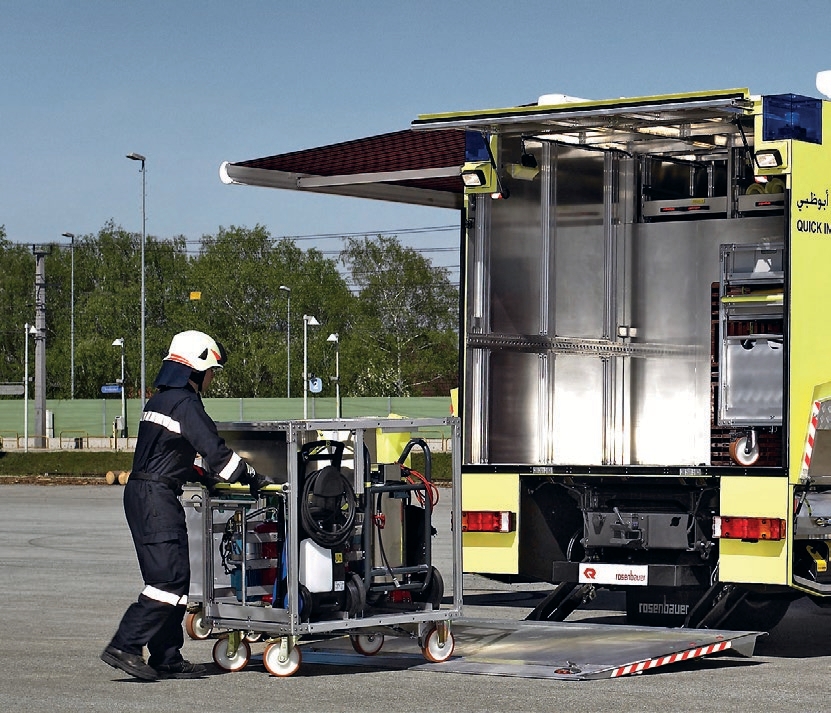
MEC (Mobile Equipment Carrier)
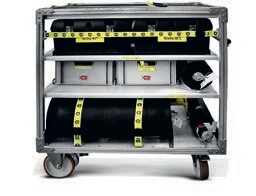
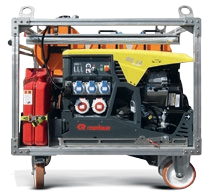
The Mobile Equipment Carrier solutions are a compact sup plement to the Rosenbauer modular concept. The equip ment package required for the corresponding operational purpose is supplied on mobile, autonomous device carriers. Examples of mobile equipment carrier packages:
▪ MEC „DECON tent“
▪ MEC „Warm water / DECON shower“
▪ MEC „DECON shower“
▪ MEC „Collecting equipment“
▪ MEC „Sealing equipment“
▪ MEC „Pumping equipment“
▪ MEC „Power supply