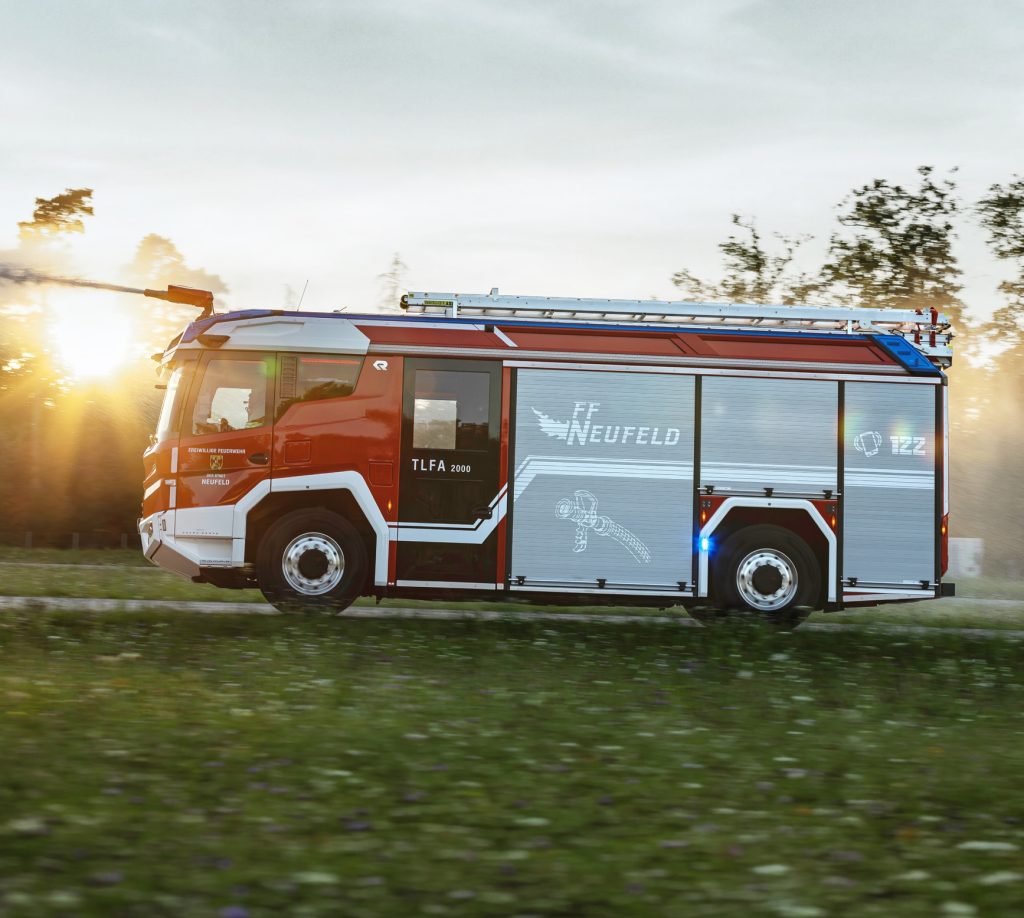
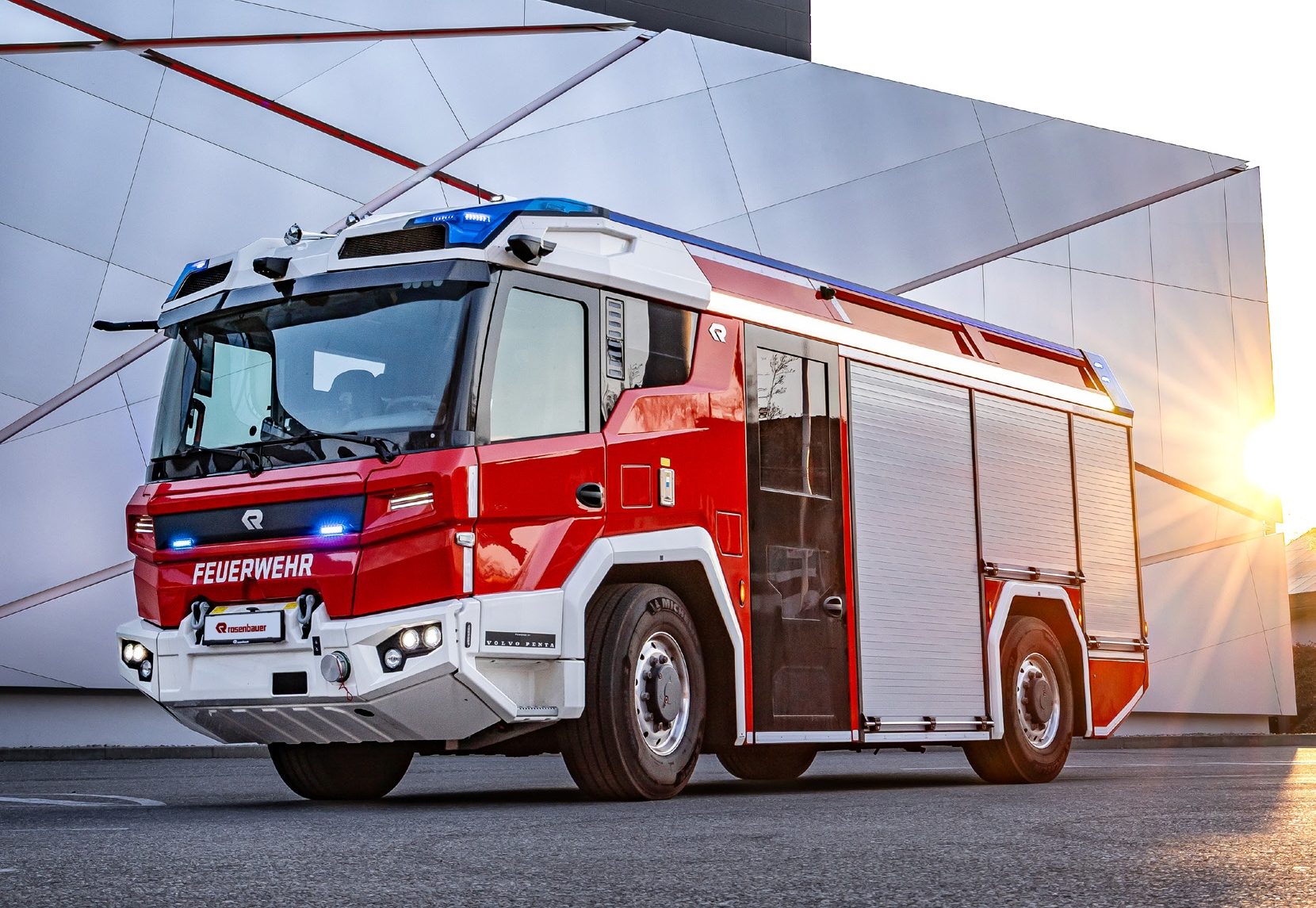
RT – Revolutionary Technology
Municipal firefighting vehicles up to 18 tons.
Ergonomic. Agile. Electric.
Large battery and energy backup system
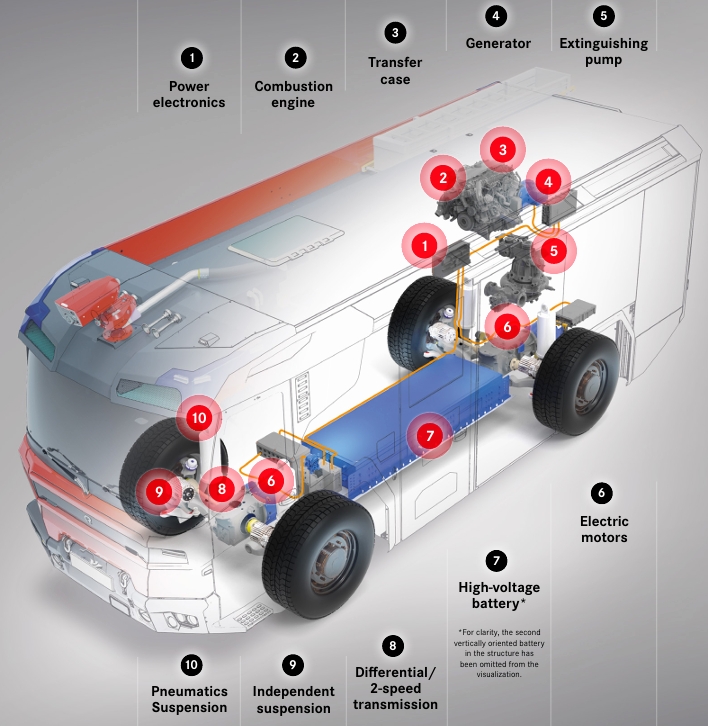
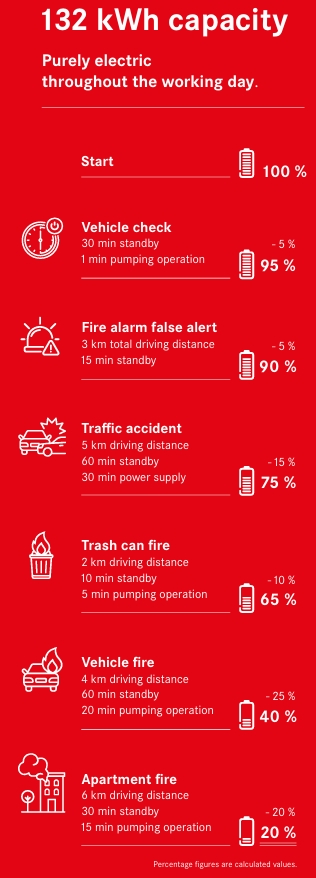
A battery with a capacity of 132 kWh supplies power to the drive system, fire extinguishing equipment, and all other consumers. In most cases, this allows multiple consecutive emergency runs to be completed purely electrically and without the need for a recharge. However, the RT can also easily handle extended operations and pumping: The built-in energy backup system switches on automatically when the battery level is low and generates electrical energy via a highly efficient diesel engine.
Always enough power
Two powerful electric motors—each connected to an axle—are responsible for the RT’s propulsion. This results in a finely controlled all-wheel drive system that can instantly react to the current driving conditions or different road surfaces. Furthermore, the powerful electric drive, in combination with a 2-speed transmission, ensures unparalleled acceleration. This allows for safe and rapid merging, even in dense city traffic
Emission-free energy supply
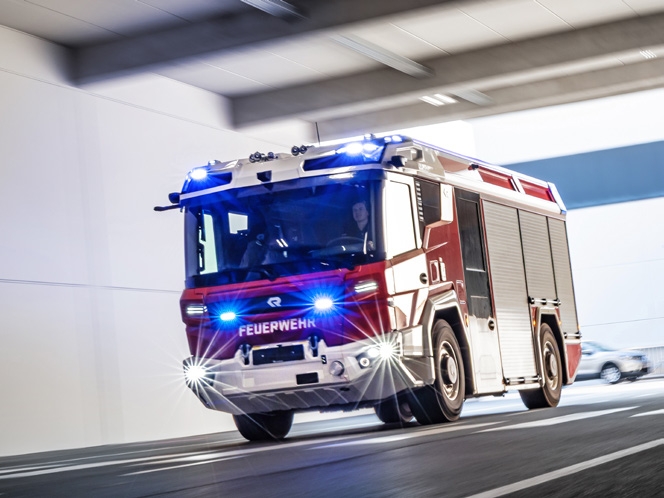
The RT’s high-voltage system ensures a high output power: Several external consumers with up to 18 kW power consumption can be supplied with energy via the vehicle, for example, multiple submersible pumps, fans, or tools for technical assistance. This means that there is no engine running at the deployment site that emits exhaust fumes or causes constant noise pollution. This benefits both the emergency crews and the local residents
Revolutionary agility.
Unmatched driving safety.
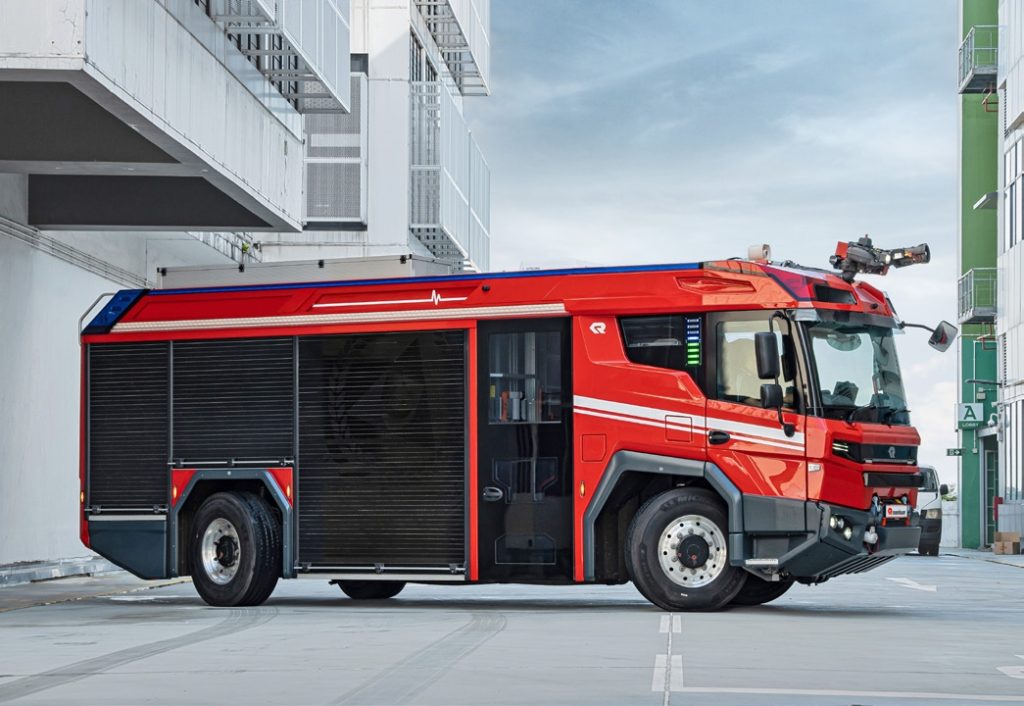
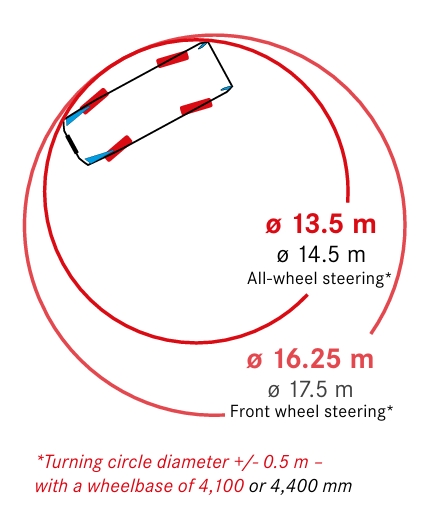
Turning in the tightest of spaces
The wheel suspension developed by Rosenbauer enables a significantly wider steering angle—even with all-wheel drive. This significantly reduces the turning circle compared to conventional vehicles of similar size, and allows reversing in very tight spaces. All-wheel steering dramatically increases maneuverability
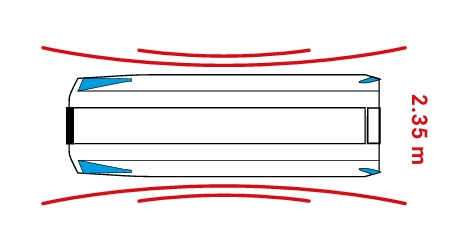
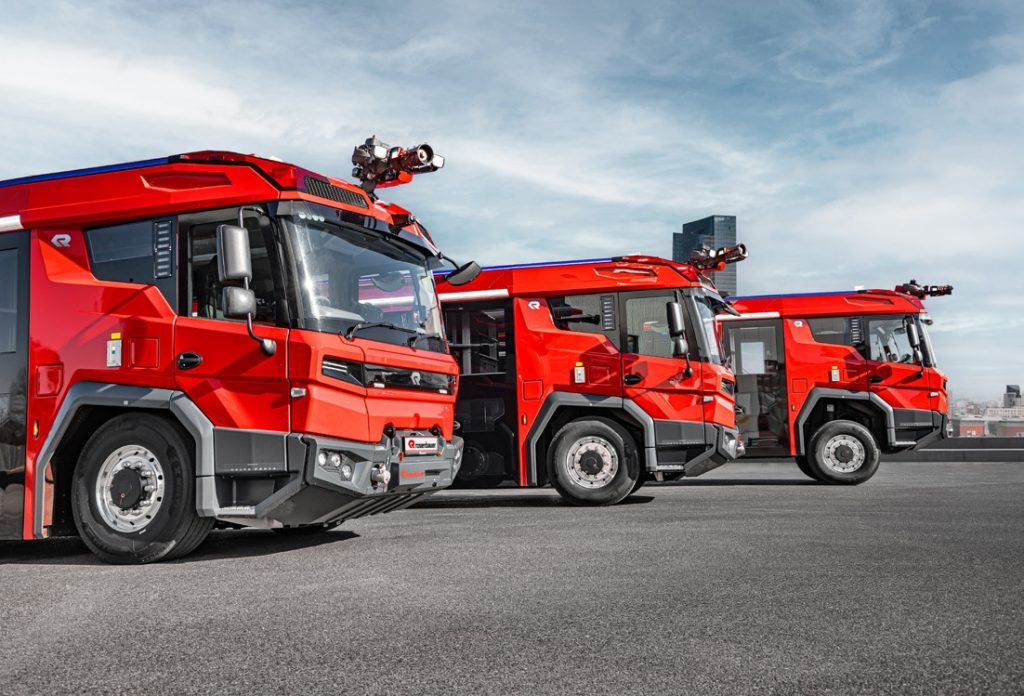
Narrow superstructure
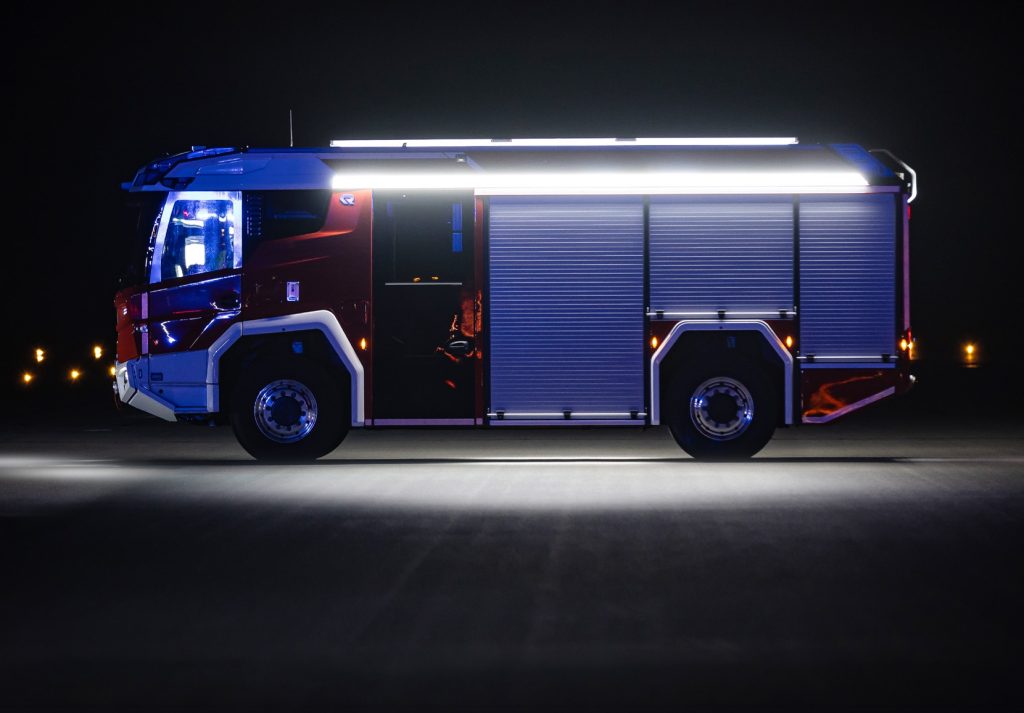
Due to its unique vehicle design, the RT is only 2.35 m wide, despite its spacious interior.
This allows emergency services to reach their destination faster, even through narrow routes and streets lined with parked cars.
Height-adjustable chassis
To facilitate entry and equipment removal, the RT’s chassis can be lowered in operation mode. For rough roads or water crossings, the suspension can also be raised to increase underaxle clearance.
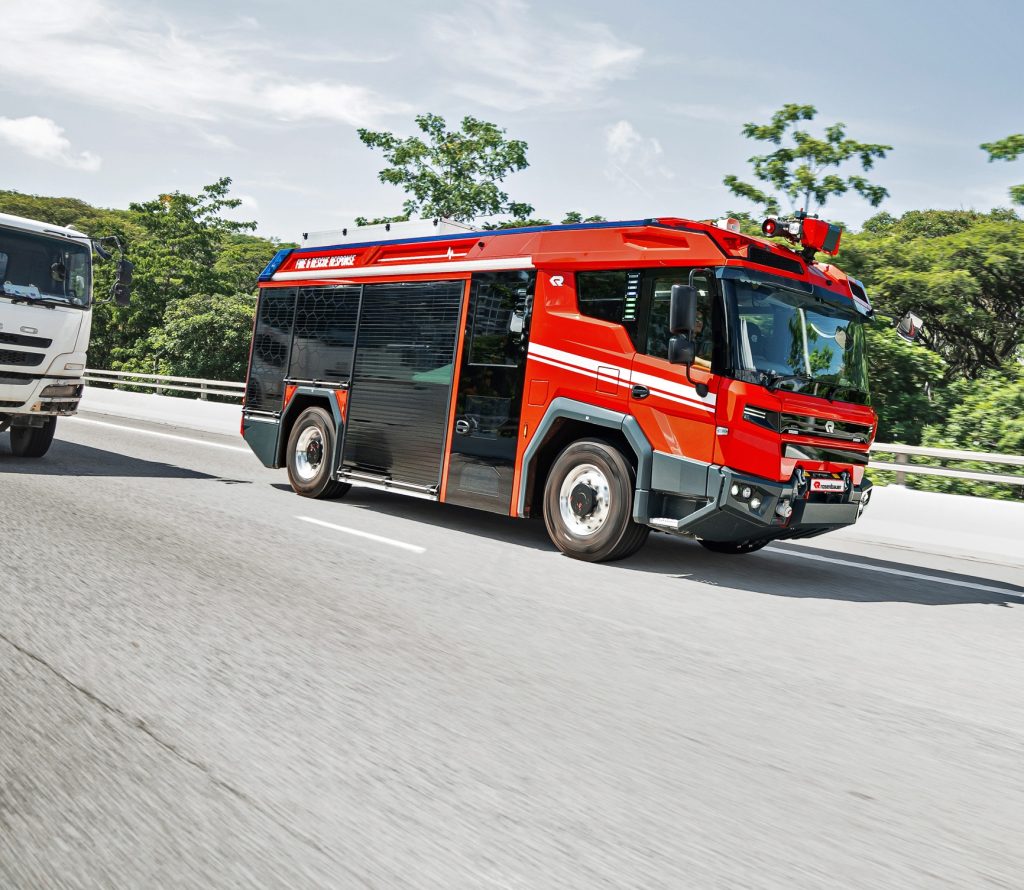
Impressive longitudinal dynamics and
cornering stability
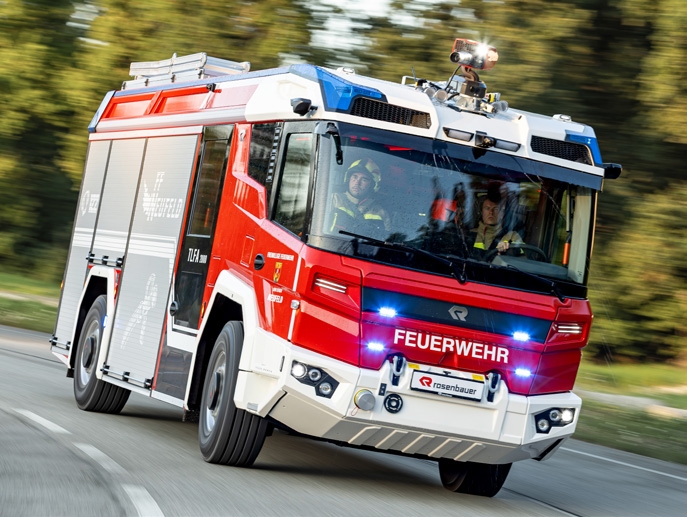
The powerful electric drive is able to continuously accelerate the RT, making it uniquely fast among fire engines. This significantly reduces the travel time to the scene of an operation. But in addition to pure longitudinal dynamics, the design-driven lower center of gravity and more balanced axle load distribution deliver unprecedented cornering stability. This significantly reduces the risk of accidents.
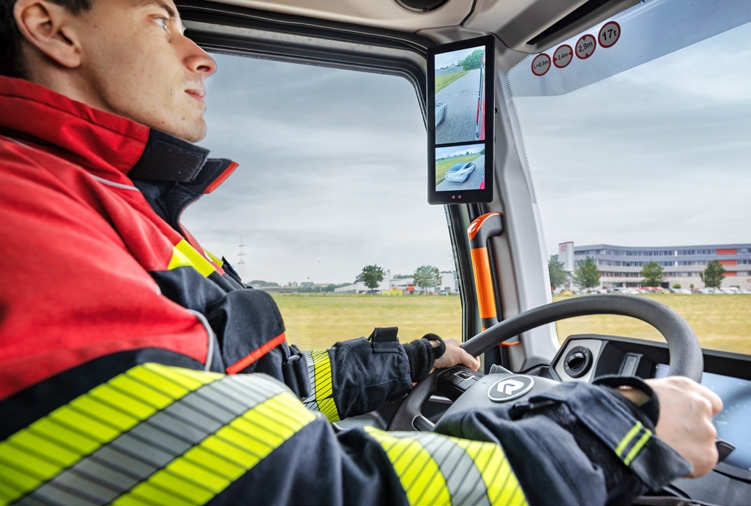
Assistance systems for increased active safety
- Digital exterior mirrors without blind spots
- Reversing camera for good rear view
- Collision warning system or turning assistant to prevent collisions with people and objects in unclear situations
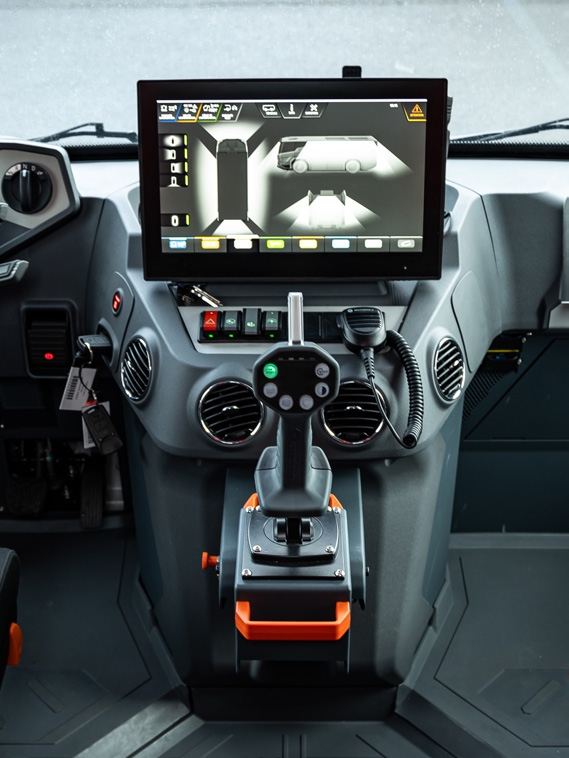
- Bird’s-eye view: top-down view for a complete overview
- Tire pressure monitoring
Unrivaled space.
Unparalleled ergonomics.
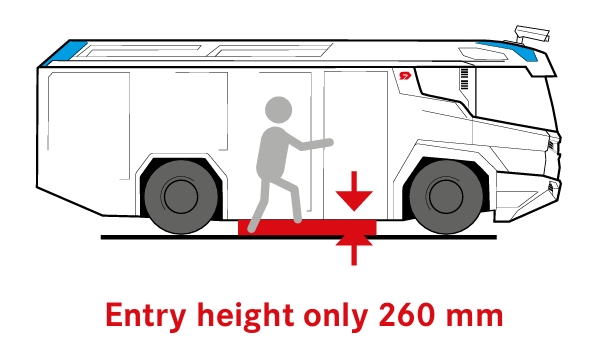
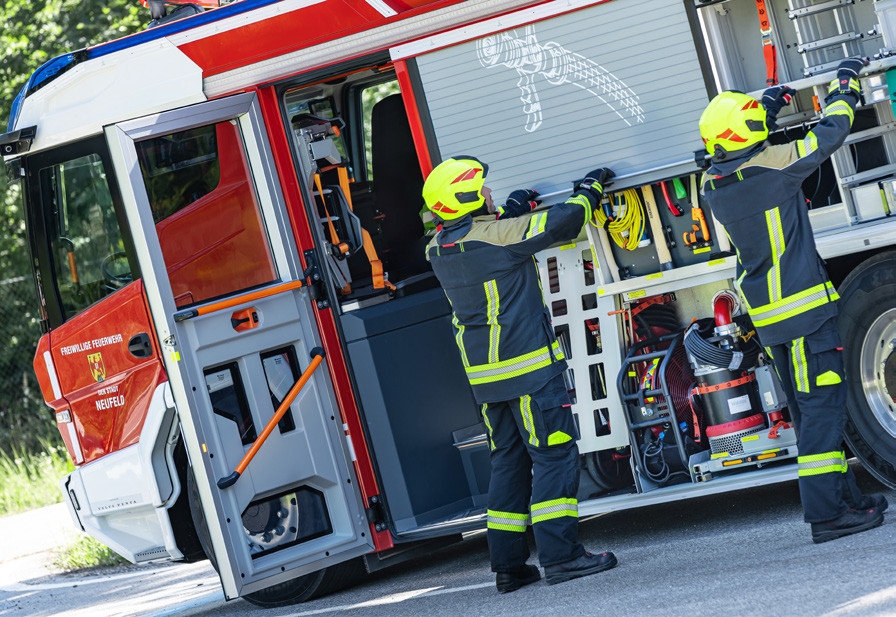
Low entry and safe removal, The elimination of the driveshaft and the extremely compact electric drive allow for a downward expansion of the usable space. Combined with the height-adjust able chassis, this makes a noticeable difference in both the crew compartment and the cargo area: Since the floor of the crew compartment is only 260 mm above street level at the scene, the RT can be accessed without steps. And there is no longer a need for hinged steps to remove equipment. This significantly reduces the long-term strain on emergency personnel, especially in professional fire departments
More equipment space, increased safety
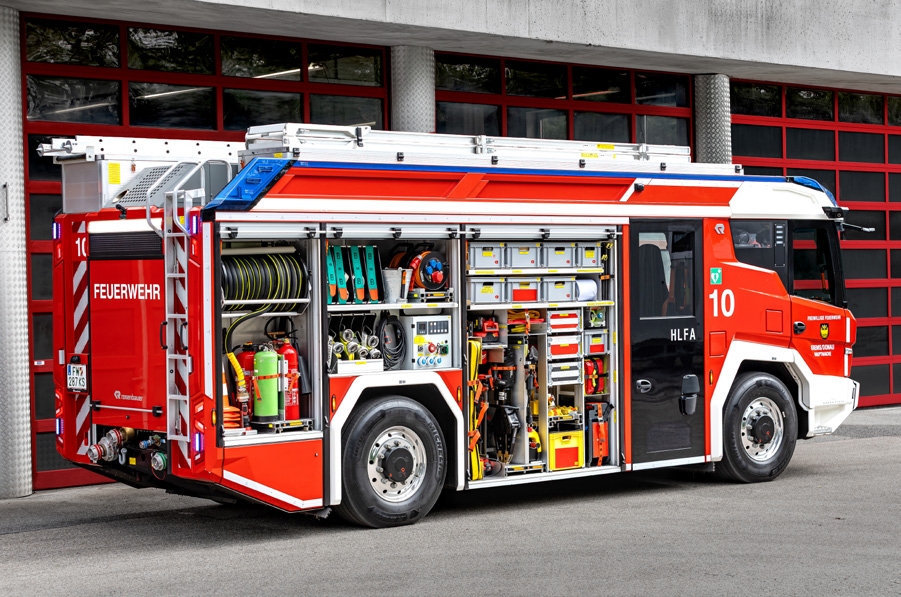
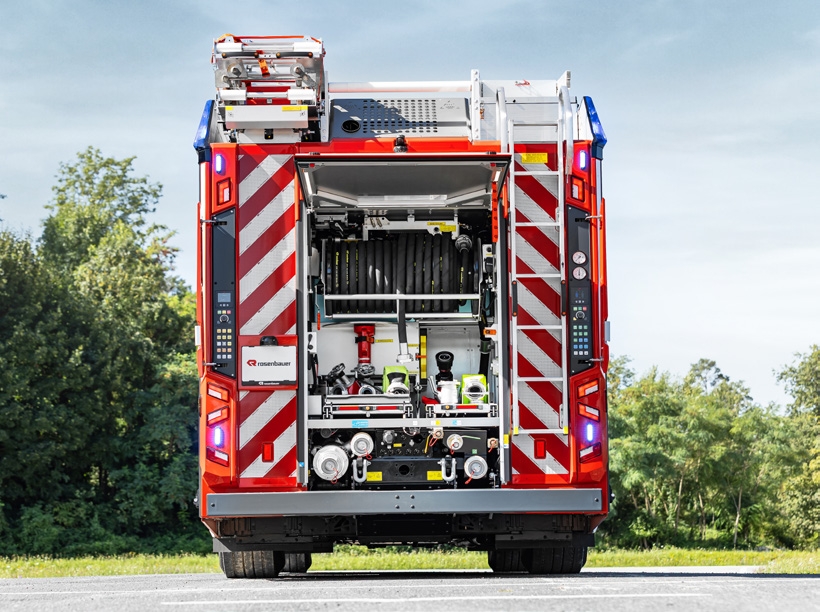
Generously sized storage compartments provide more storage space at a low height. In order to optimize axle load distribution, the water tank and pump unit have been positioned as far forward as possible. This creates a practical and spacious equipment compartment in the rear of the vehicle. The optional ladder lowering device – manual or electric – avoids peak loads and thus prevents injuries
Cabin structure facilitates communication
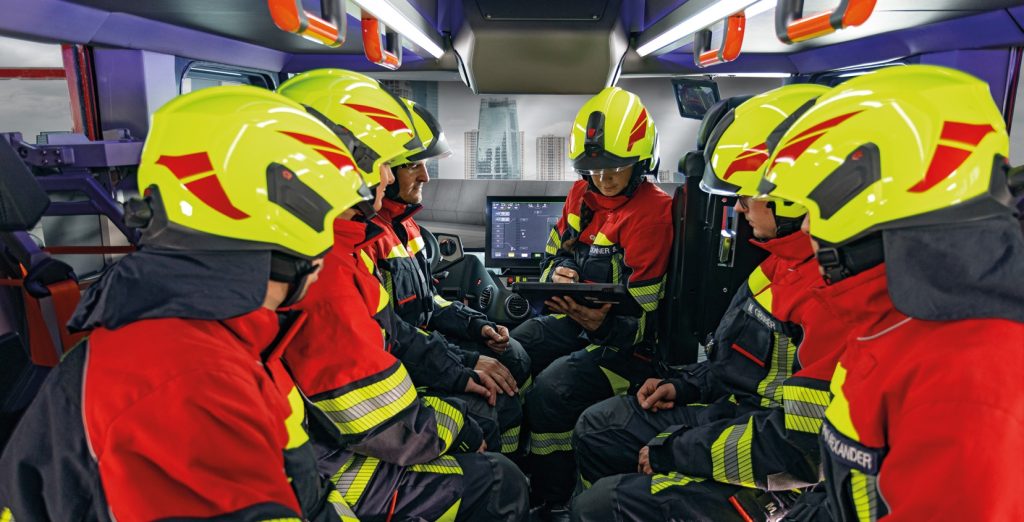
The RT’s cockpit and crew cab have been completely redesigned: the crew and driver areas are no longer separated. The driver’s and commander’s seats can be rotated. This simplifies communication, and even allows for a conference seating arrangement for operational briefings. The cabin’s high-strength construction also ensures a high degree of passive safety
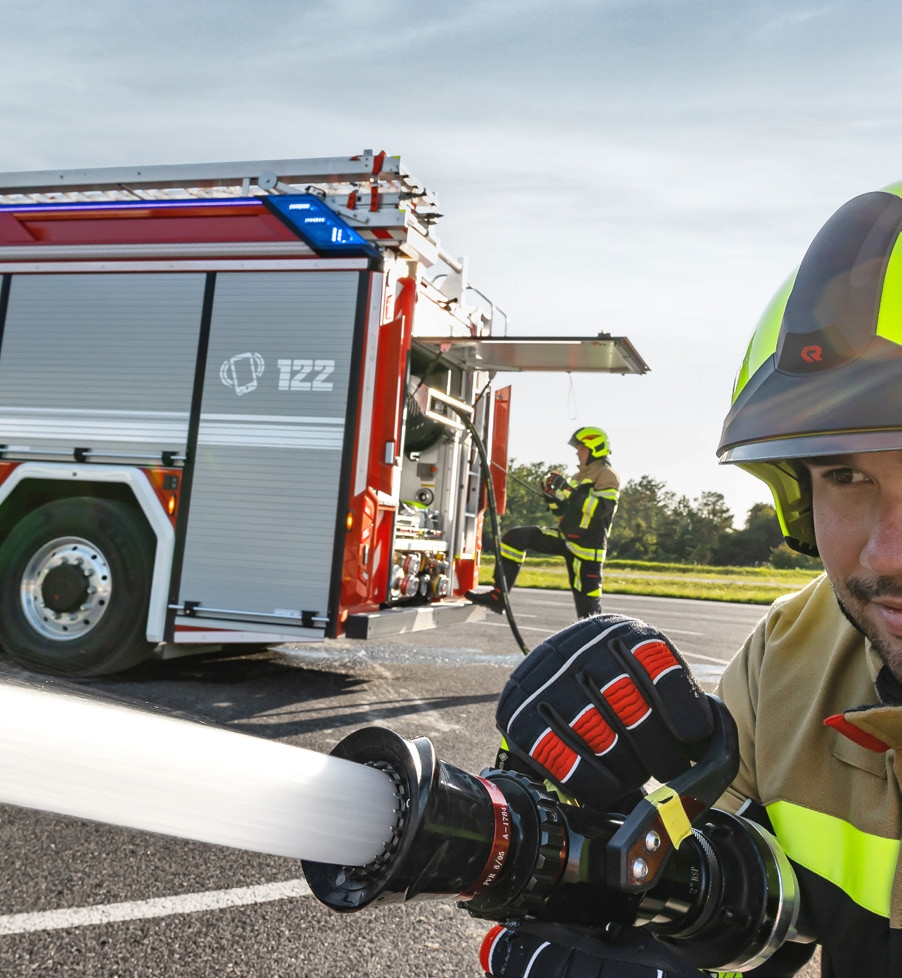
State-of-the-art firefighting equipment.
Broad spectrum of application
FIXMIX 2.0
In the RT, the foam proportioning system is electronically controllable, can be integrated into the pump, and offers both fixed and continuously adjustable proportioning rates.
High-pressure FIXMIX
This mechanical high-pressure proportioning system is maintenance-free and can be fully integrated into the pumps. It allows foam on the high-pressure side and water on the normal-pressure side simultaneously. One of four mixing ratios is available (0.5%, 1%, 3% or 6%).
RFC Admix Variomatic
This direct injection proportioning system enables independent proportioning at each outlet as well as stepless adjustment of the proportioning rate. The foaming agent is injected directly at the discharge outlet, making the system easier to clean after use.
Compressed air foam system (CAFS)
Compressed air is used to create a firm foam directly at the point of mixture of water and foaming agent, enabling particularly long throw distances
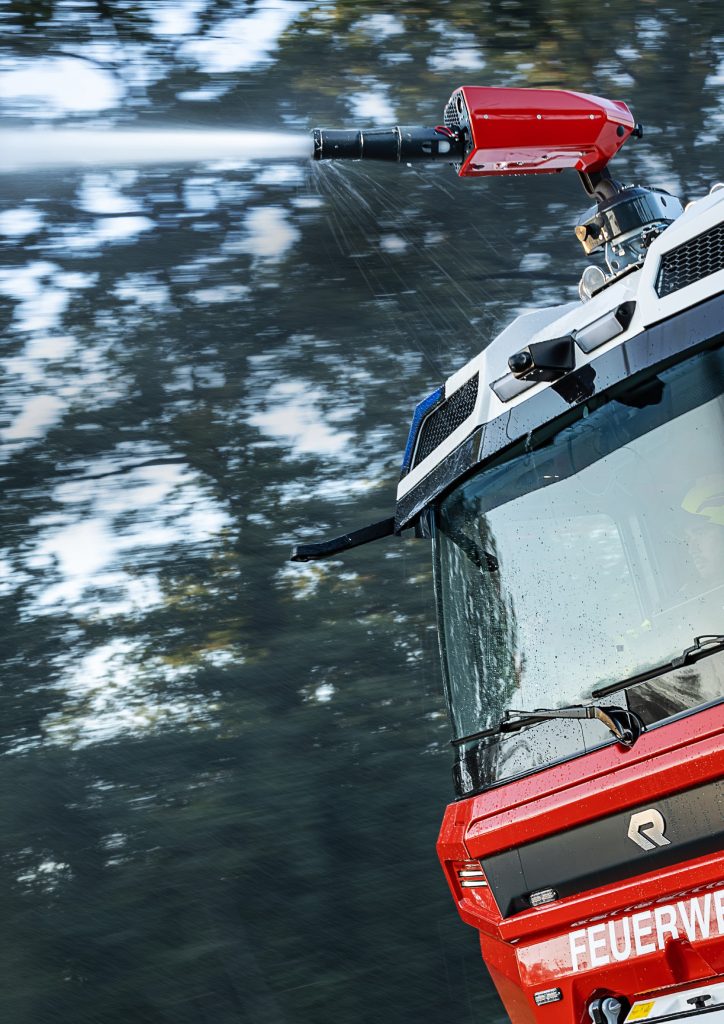
Remote-controlled turrets
Two turrets are available: The compact
RM 15 offers a maximum flow rate of 2,000 l/min at 10 bar and can be mounted at the front or on the cab roof. The RM 35 offers a maximum flow rate of 3,500 l/min at 10 bar and is mounted on the cab roof.
Powerful pumps and centralized supply
The RT is available with standard and high-pres sure pumps with flow rates of up to 4,500 l/min. The polypropylene (PP) water tanks have a capacity of up to 3,000 liters. A central water supply allows all supply hoses to be connected at a single point. The reliable separation of potable and non-potable water during hydrant supply operation allows for a tank inlet that
complies with DIN standards